

Bridging battle and bedside to advance trauma care at VGH and beyond
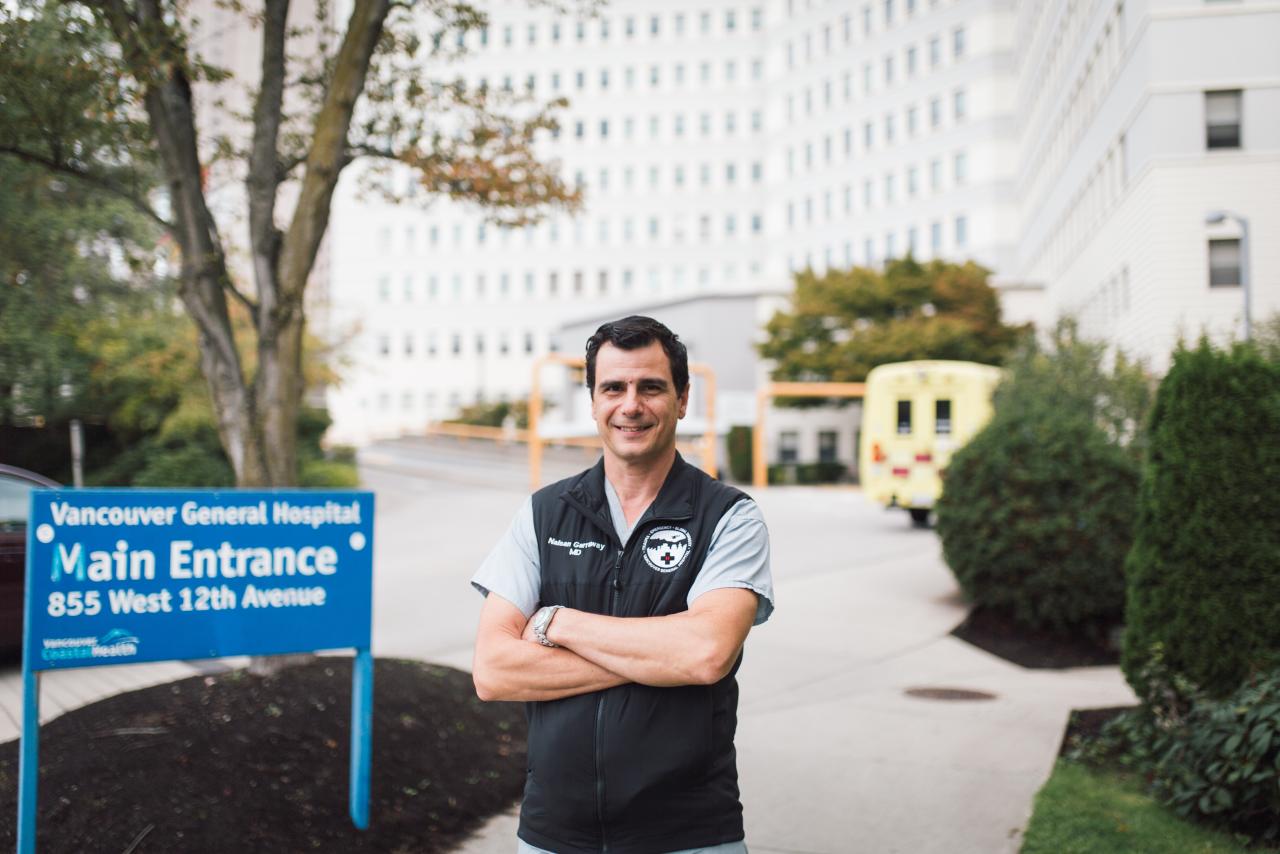
When Dr. Naisan Garraway became a trauma surgeon with the Canadian Armed Forces, he shared a common goal with health-care staff and medical staff across the country: to save lives. This is reflected in the decades-long partnership between the military and Vancouver Coastal Health, a collaboration that has resulted in innovation and enhanced care for patients at home and overseas.
The partnership dates back to the late 1990s, when Dr. Ross Brown, now Regional Medical Director, Emergency Health Management, trained under Dr. Richard Simon, founder of Vancouver General Hospital's trauma program. In the early 2000s, military hospitals around the country were closing, meaning military medical specialists and care staff shifted to work in civilian hospitals between deployments. Dr. Brown became the first military physician embedded at VGH.
“VGH is a busy trauma centre and when military specialists work here, we maintain our skills," says Dr. Garraway, Medical Director for VCH's Regional Trauma Program and a Lieutenant-Colonel with the Canadian Forces.
The specialized services at VGH also offer military physicians the chance to get up to speed on new skills outside of their regular scope that can prove lifesaving in the field.
“The first time I was deployed to Afghanistan, I had to do vascular surgery, trauma surgery and craniotomies – I had to do everything," Dr. Garraway says. “Working in a hospital like VGH is great because I could brush up on everything I needed to know – burns, vascular surgery, neurosurgery."
When military surgeons come home from deployment, they bring valuable experience with them. Techniques and tools developed under battlefield conditions, such as tourniquets or REBOA, a balloon-tipped catheter that stops internal bleeding, are now being used in Canadian hospitals to benefit critically injured patients. VGH was the first hospital in B.C. to adopt the use of REBOA, a process developed by an American military surgeon that was never expected to catch on for mainstream use but is now saving civilian lives.
After more than three decades in the military, Dr. Garraway is retiring from service this year to focus on his family and his increasingly substantial role at VCH. He acknowledges the impacts that military service can have, noting that 25 per cent of people in the medical branch suffered some kind of acute stress or post-traumatic stress disorder (PTSD).
“My experience overseas has made me more understanding of families and patients and the fear of what they're going through, which I really try to alleviate for them," he says. “To take that compassion and bring it back to Canada has changed me for the better."
