

Story
Planning, precision and efficiency: improving care one spinal screw at a time
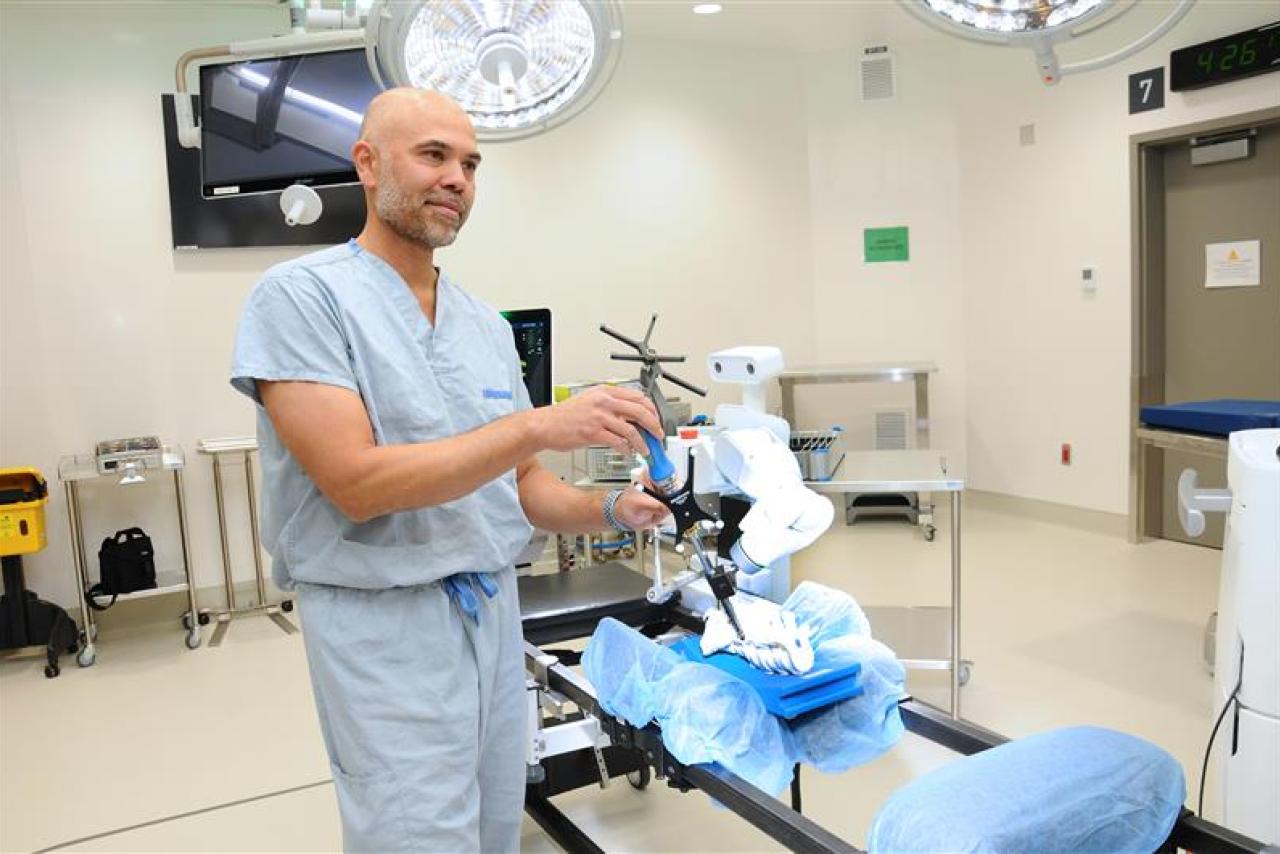
A new tech tool is enhancing spinal surgeries and patient care at Lions Gate Hospital, with eight patients benefitting from the neuro robot since April 2025.
Pictured above: Dr. Shahid Gul, head of neurosurgery at Lions Gate Hospital, says that robot-assisted spinal surgery helps surgeons provide the best outcomes possible for their patients.
If robot-assisted surgery sounds futuristic, the future is now at Lions Gate Hospital, where a new neuro robot is improving outcomes for patients receiving spinal surgery.
The Mazor Robotic Guidance System arrived at the neurosurgery department at Lions Gate Hospital earlier this spring, making it the first hospital in British Columbia and just the third in Canada to acquire this innovative technology. The robot is used in complex surgeries for patients with degenerative spinal disorders, spinal trauma or spinal tumours who require implanted spinal hardware. So far, it has seen eight patients since it was implemented in April.
“I describe it as a three-in-one surgical tool for certain patients requiring spinal hardware," Dr. Shahid Gul, head of neurosurgery at Lions Gate Hospital, says. “Ultimately, this helps to not only bring a level of excitement to what we do in the operating room but also put us in the best position to provide the best care that we can for our patients."
The key benefits of this new tool include enhanced planning, as the robot comes with 3D imaging software that allows surgeons to plan surgeries far more effectively than they could in the past. It also allows for precise navigation when implanting spinal screws, and the robotic arm delivery system for the screws makes the process more reproducible, ergonomic and efficient for the surgeons. With this robotic technology, surgeries can be less invasive, reducing blood loss and the risk of infection and helping improve recovery times.
Ultimately, the use of the neuro robot is expected to revolutionize care not only for individual patients but the surgical system more broadly.
“Success is seeing the robot helping to provide the best care that we can to our patients by shortening operating room times and hospital stays, reducing potential complications and seeing improved patient outcomes and satisfaction – ultimately, even reduce the need for repeat surgery down the road," Dr. Gul says. “We want to provide not only the best short-term outcomes, but also outcomes that are more durable."
The neuro robot was purchased with funds from the Lions Gate Hospital Foundation, with North Shore philanthropists Ian and Rosemary Mottershead donating $1.75 million for the purchase of this cutting-edge technology.
Photo credit: Lions Gate Hospital Foundation
