

Keep your home safe during winter
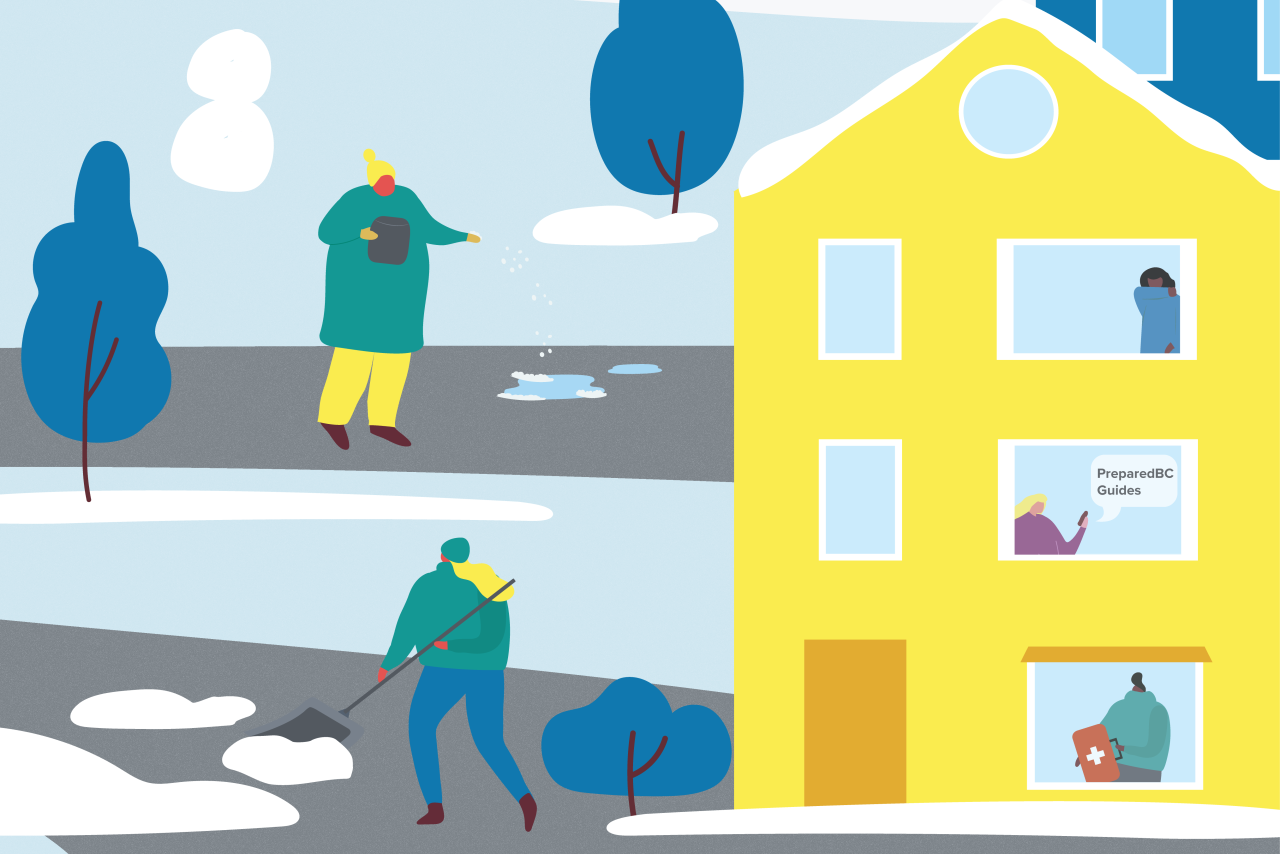
When winter arrives, people spend more time indoors, most often in their home. Preparing your home is one of the best ways to stay safe during the winter weather.
Proactive measures to prepare your home
- Heat your home to at least 21℃ if infants or elderly people are present. During winter months, heating costs may increase. If you have difficulty paying for heat, check if your city or town has a rent bank.
- Make a plan and get your home ready for winter hazards in your area. See the PreparedBC Guides for winter weather and storms, power outages, floods, avalanches and other BC hazards.
- Build an emergency kit and restock it after each use. See the PreparedBC Home Preparedness Guide.
- Keep the areas outside your home, like sidewalks and parking spots, clear so everyone can move around safely.
- Learn snow shovelling tips to prevent injuries.
- Some communities have Snow Angels / Snow Stars programs to assist seniors and people with disabilities or health conditions to clear snow off walkways. This can decrease the risk of injury or heart attacks, while supporting people's mobility. Volunteers are always needed! Contact your local government or First Nation for more information.
Carbon monoxide risks during winter
In winter, carbon monoxide poisoning happens more often because some heating systems burn fuel, like gas, wood, charcoal, oil, or kerosene.
Carbon monoxide poisoning occurs when you breathe in too much carbon monoxide. This can happen if appliances malfunction or are used in places without enough ventilation, like when chimneys are blocked, windows are closed, or inside a tent.
You can't see, smell or taste carbon monoxide, but it can be deadly in minutes.
Learn the symptoms of carbon monoxide poisoning and prevention tips (HealthLink BC)
Carbon monoxide poisoning: sources, symptoms, and treatment
Dr. Bruce Campana, a hyperbaric physician at Vancouver General Hospital talks about the symptoms, sources, and risks of carbon monoxide poisoning.

