
What is mental health?
If your child is having a mental health or substance use crisis:
- Call 9-1-1 or take them to the nearest emergency room
- Call 310-6789 for mental health support
- Call 988 for the National suicide crisis line
- Kids Help Phone (1-800-668-6868)
- KUU-US Indigenous Crisis and Support Line: 1-800-588- 8717

Learn about mental health and mental health literacy to support your child's mental wellness, including how to seek support for children, how to talk about mental health as a family and how to foster children's positive well-being.
Mental health is part of our overall health. It is more than just having or not having mental illness. Mental health can be defined as “a state of well-being in which we live and work meaningfully, our relationships are healthy, and we can adapt to and cope with the normal stresses of life.”
A person can have a mental illness and good mental wellbeing at the same time. Just as it's possible to have poor mental health but no mental illness, it's entirely possible to have good mental health even with a diagnosis of a mental illness.
Mental health literacy means
- Understanding how to develop and keep good mental health
- Decreasing negative attitudes about mental illness
- Understanding mental disorders and how they are treated
- Understanding how to find the appropriate help for yourself and your child
Various cultures think about and understand mental health in their own ways
Some Indigenous perspectives on health and wellness involve working to create a balance between their mental, spiritual, emotional and physical health.
Did you know? Mental health literacy is part of B.C.’s Physical and Health Education curriculum.
A first step for learning more about mental health literacy in schools might be to connect with your child's school to find out about their initiatives or programs.
Part of Mental Health Literacy is understanding the different words we use to describe different states of mental health.
Part of Mental Health Literacy is understanding the different words we use to describe different states of mental health.
When considering the different states of mental health, it is important to:
- Use the appropriate terms when speaking about emotions and experiences. For example, "I feel anxious, stressed or nervous” rather than “I have anxiety.”
- Understand the difference between experiences of mental distress, mental health problems, and mental disorders.
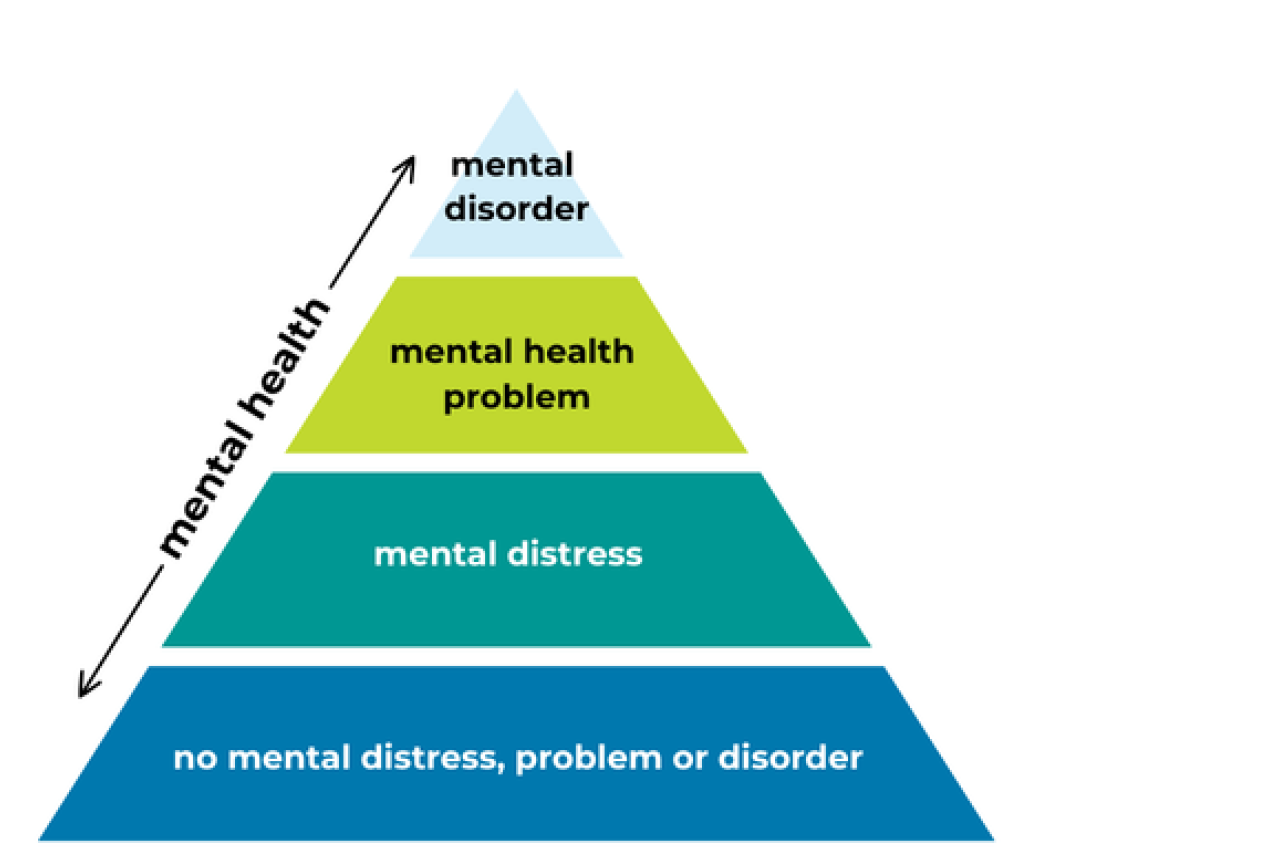
- A mental disorder is diagnosed; it requires treatment from a health professional (for example, an Anxiety Disorder). Scroll down to the bottom of this page for mental health services you can access for your child.
- A mental health problem is when one’s ability to adapt is challenged by a serious stressor. Counselling and other support may be needed (for example, dealing with family separation). Scroll down for guidance about when to seek extra support for your child
- Mental distress is the common, short-term response to the stresses of everyday life (for example, failing a test) When stress levels start to negatively affect you, try B.C. Children's Kelty Mental Health Resource Centre’s relaxation and healthy thinking strategies
No mental distress, problem or disorder is feeling at ease, balanced, adapting to challenges, and enjoying our daily lives
You can support this by introducing healthy living habits and doing activities that bring your family joy.
How can we promote mental wellness within our family?
Some things that impact mental health are outside an individual person’s control, like the bodies we're born with, certain relationships, some life experiences (like discrimination), some of our living conditions (such as safety in our community), and the systems that impact daily life (like the economy).
But, there are some things families can do to promote mental health and support well-being, including encouraging family members to talk about how they are feeling.
Talking about mental health as a family
“Just having a conversation with your child is a great place to start. You don’t need to have all the answers – just be willing to listen and to be open, curious and compassionate. That’s what matters the most.”
- BC Children’s Kelty Mental Health Resource Centre.
So, how can you get started?
- Try to talk about mental health and well-being regularly. Stay calm and be patient during conversations.
- Use everyday language when talking about changes you’ve seen. Don’t talk about changes as mental health symptoms.
- Find a good time and place to talk (for example, in a safe space, on a walk, working on something).
- Be curious and empathic. Let them know you want to understand what they are feeling.
- Listen and try to understand what has led to changes that you or your child have noticed.
- Support their problemsolving by asking them what they would like to do or what they think they need.
For more ideas, check out FamilySmart’s resources created by young people about what they want to hear from their families in challenging times
What are signs and symptoms of mental health problems and disorders and when should I be seeking extra help for my child?
You are often the best judge if your child is struggling.
Trust your instincts. If you notice something is different about your child’s behaviour, be curious about it. Look for changes in behaviour, mood or relationships. Some examples of behaviour that might raise concerns:
- having sleep problems
- changes in eating patterns
- feeling sad for long periods of time
- having mood swings feeling anxious
- refusing to go to school or having more difficulty at school
- not wanting to leave the house or participate in activities your child typically enjoys
- having problems in friend/family relationships
Mental Health Support for Families Mental health problems and disorders impact how a person thinks, feels and behaves. There are many different signs and symptoms, and these can look different for everyone.
See this webpage by Kelty Mental Health Resource Centre for more information

Mental health support for families
There are many different signs and symptoms, and these can look different for everyone.
- Talk with your family doctor, head to a walk-in clinic or get support from a mental health professional.
- Talk to peer support workers at Family Smart and Kelty Mental Health Resource Centre who support parents/caregivers of children and youth aged 0 to 24, while Foundry supports parents/caregivers of those aged 12 to 24.
Resources
Download the PDF version and explore translated versions below.
These family-friendly guides were created together by Vancouver Coastal Health and the BC Children’s Hospital - Kelty Mental Health Resource Centre teams to support you and your child.